Tuesday, 20 October 2020

Brown Shrike

I decided to go on a "twitch" today. A brown shrike had been reported at South Kirkby. I did not attempt to go on Sunday as I thought that it could have been busy. I had not been in the area before so it was a question of following the sat nav. I saw a line of parked cars, and a chap was putting his telescope etc. in the car. I asked him if it was still there and he said it was. He advised me to wear wellingtons and take my scope, but not my camera as the bird was too far away.
I put on my wellies and set off. Under neath the railway arch and then along a track.
The track was very muddy in places so I ws glad that I was wearing wellies.Over a stream.


 Then it was under the railway again


Clambered over a ditch and walked across a field to join the other birders.

The birders were closer to the bird than I expected  and I regretted not taking my camera. The following is  my attempts at digoscoping.


The bird just sat in a bush and did not move, so after a while I left and went to RSPB Old Moor.


This area used to be a hide.


The weather was pleasant and it was nice to stroll round in the sunshine.
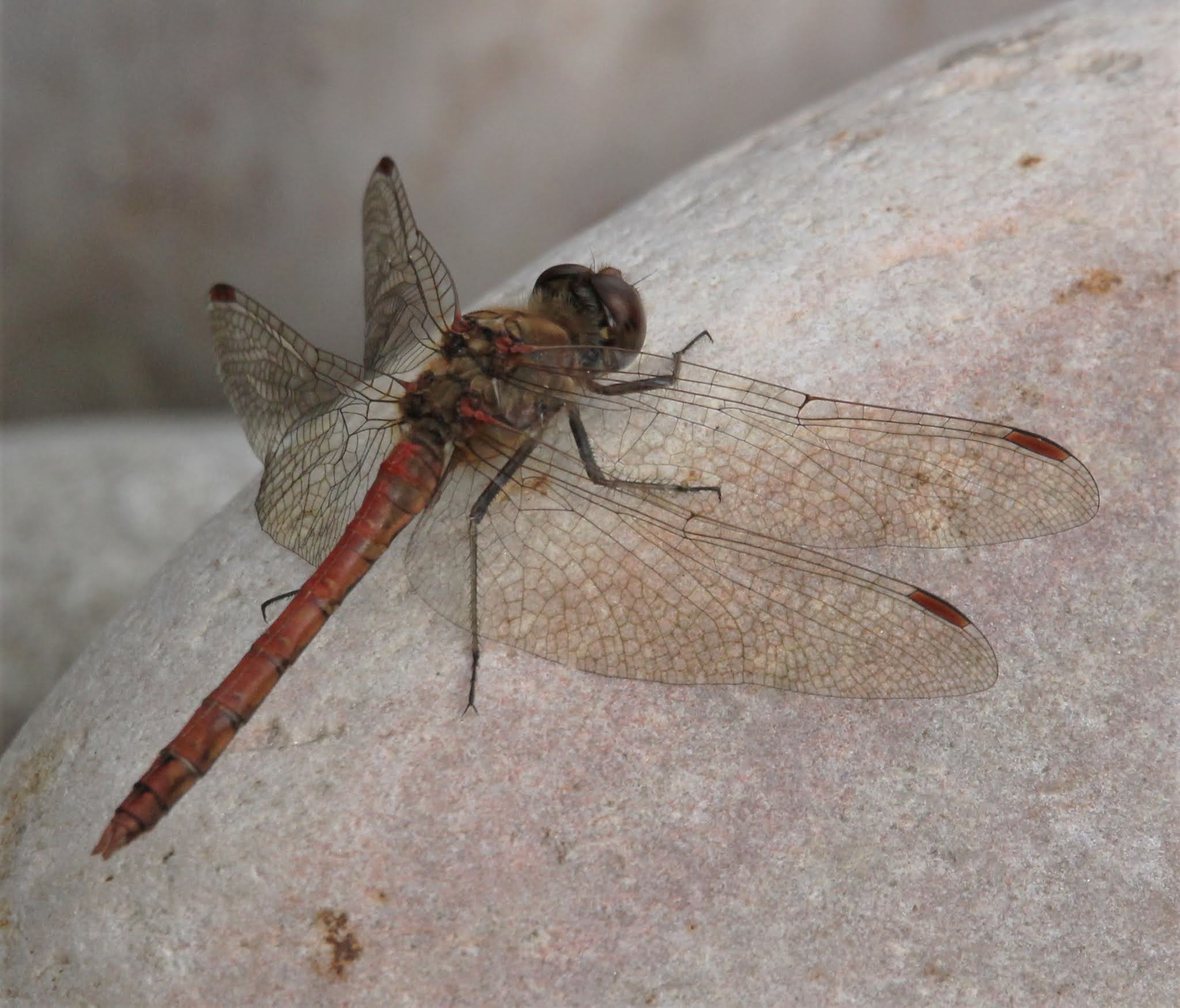
Several dragonflies were on the wing.

A peacock butterfly was enjoying the sunshine.


From one of the hides I was able to see a jack snipe. My list for the year is now 188, I am slowly getting closer to 200.

Thursday, 15 October 2020

A spot of East Coast Birding

My only free day of the week and the weather forecast looked reasonable with a wind from the east, so birding at the coast could be good. I arranged to meet Stu at the Country Park.
We parked at the top of the park and noticed a few birders from FBOG were ringing not far away.
We strolled over to speak to them, The wind was a bit strong and not many birds were on the move. They had managed to trap blackbirds, goldcrest and greenfinches.
We walked off around the small copse of trees looking for birds. As we got to the end of the path we came across several greenfinches, goldfinches and redwings. Further along the path we saw this deer in a field.

We then walked along the cliff top path and met two birders who had seen snow buntings further along. So off we set but could not find the birds, and the number of dog walkers was increasing. The wind was quite strong so we assumed that the birds would be sheltering rather than feeding in the open.

Not many birds to be seen on the sea so we decided to check out the trees etc near the ravine. A few birds about mainly goldcrests hiding from the wind and rain. 
We walked back up towards the ringers and came across more redwings etc. when a message came in about a merlin and a short eared owl on the Brigg. We walked there but could not see them. We discovered later that the birds were flying high overhead, whilst we were looking on the ground!
Stu found a stonechat


It was approaching lunch time and the ringers had stopped as they had not managed to trap many birds, so we decided to go to Filey Dams.
We sat eating our lunch, socialy distance of course, watching teal and a black tailed godwit.

I cannot work out what is in its beak, but the bird is covered in mud.

Male mallards and teal are starting to look smart now in their breeding plumage.


As birdlife was quiet we decided to go to Scarboro to look for med gulls so Stu could add them to his year list.

On previous visits with Chris, we have seen black headed and med gulls in the car park area. However we could not see any gulls at all. Stu noticed some gulls on the sea, so we walked down the hill for a closer look.


As it was nearing high tide the waves were starting to crash against the rocks.
We could see the gulls more clearly now, but they either disapeared from view when a wave came or flew off a short distance.

Next problem was trying to find a med gull with my camera

none there
at last

these turnstones were dodging the waves.


Stu decided to head home and I went back to the Dams for half an hour and was able to add wigeon and these snipe to my day list.


Thursday, 8 October 2020

Sunny Thursday afternoon

After lots of rain during the night and early morning it was nice to see some sunshine as I drove to Blacktoft after lunch.


I started at Marshlands. Quite a lot of gadwall were busy feeding along with a single redshank and 3 mallards. A few teal flew in and a few lapwing, and gradualy the numbers of both increased. The gadwall flew off as they became surrounded by the teal and the mallard left the little island that they were on as the number of lapwings increased.
Xerox had a large number of teal and shoveler, most of whom were asleep. There were a few redshank and spotted redshank amongst them.
First hide lagoon had no birds on it.
Townend had a little egret, busily fishing.


Singleton had several redshanks and a single spotted redshank, 2 young mte swans, a little egret and 2 carrion crows.
A water rail was walking along the bottom of the reedbed and every now and again it came out into the open. Not a brilliant shot due to the distance.

A pleasant afternoon.

Tuesday, 6 October 2020

It is true!

What is true I hear you ask, read on and all will be revealed.
On my way to see the hoopoe last week, a stone flew up from the road and caused a crack in my windscreen. This morning I took the car to the garage to get it replaced.So only a limited time to go birding. On my way to Staveley yesterday I noticed that the River Nidd had burst its banks, so I thought that I would visit the Lower Derwent Valley to see if the River Derwent had burst its banks.
My first stop was at Bank Island, Wheldrake. The car park was full and I could see several vehicles in the area where I expected to see water, so I left and drove to North Duffield Carrs.
On my way there I passed a line of men holding flags. They were beaters, flushing birds towards the awaiting guns. It reminded me that I live in the county with the worst record for killing birds of prey, especially where grouse shooting is held. It must stop.
No vehicles in the car park, so I walked to the Geoff Smith Hide.
This is the view I had.
As you can see the river level is high, but not high enough to flood the fields.

the farmer still has sheep in the field, so presumably he feels confident that the river will not flood soon.
Work has been done on the "scrape" in front of the hide.
It will be interesting to see which birds it attracts this winter.
A few gulls on a fence near the river.

apart from these birds it was very quiet. A few goldfinches feeding on the thistle seeds and a female reed bunting flying past was all I could see, so I decided to go to North Cave.
Lots of shovelers on the water and greylag geese and grey herons on the far bank.
The floor has been replaced in Crossland hide so I was able to go in.

Lots of lapwings, shovelers, wigeon and teal on the water.
a little egret stood out in the afternoon sunshine.
Over on my right, a yaffle or green woodpecker was feeding on the ground.


the bird was just too far for my lens to get a brilliant shot.
Time to go home and I had only just got into my car when the heavens opened and the rain poured down. So it is true that if you hear/see a green woodpecker it will rain!!


Monday, 5 October 2020

Monday afternoon at Staveley.

I arrived at 1245 and parked in the last space in the car park at Staveley.
As I walked along the path to the reserve I was talking to a couple from Doncaster, who were on their way to Harrogate and had stopped for a walk. It was their first visit to the reserve and I was able to tell them a few things about the place.

This was my view from the first hide.


A few Canada geese and mallards were having a snooze on the bank.
As I walked to the next hide I noticed that there is still a bit of colour in the vegetation and food for the birds.


A small party of goldfinches and bullfinches were feeding on the thistle seeds. They flew into the bushes and I managed a quick shot of a young male bullfinch.

From the next hide I could see lapwings and cormorant on the far side of the water. The bird feeders had been filled and I was able to watch various birds come for food.

The greenfinches were happy to sit on the perches on the feeders and eat the seeds.
The other birds then had to wait for a chance to fly in and take a beakfull of seeds and then fly away.


Mr and Mrs Chaffinch did not stay too long.
A coal tit could not get onto the feeders at all.


great tits managed to sneak in every now and then.

I think that this could be a female as the black band on its stomach is not very broad.
On the way to the next hide I came across these dragonflies. One was on the path and another was on a plant.


The feeders outside the next hide had also been filled and I was able to watch birds coming to feed.
This male chaffinch perched on the edge of this feeder, while the tree sparrows were inside feeding.

I then walked to thefurthest hide from where I could see lots of canada and greylag geese and a single barnacle goose.

On my way back to the car park, a red kite drifted over. A pleasant afternoon with a list of 31 birds.